The core areas of work through which the Directorate safeguards and raises academic standards across the University.
Facilitate departments in preparing comprehensive self-assessment reports for all academic programs, and follow up on the implementation plans that come out of them.
Support departments in preparing for evaluation visits by national accreditation councils and for international accreditation processes.
Conduct periodic review of academic programs — curriculum, delivery, assessment and resources — to confirm that quality standards are being met.
Organise training sessions and workshops on quality assurance, outcome-based education, assessment design and self-assessment reporting.
Administer the HEC survey proformas to students, faculty, alumni and employers, analyse the results and report them to the competent authority.
Maintain a complete and auditable record of all quality enhancement activities, reviews, decisions and corrective actions of the University.
Develop programme specifications that define the knowledge, understanding, skills and attributes a student acquires on completing a programme.
Apply the Pakistan Qualification Framework in curriculum development so that every qualification sits at its correct level.
Coordinate the Institutional Performance Evaluation exercise of the HEC and track the University against its findings.
Act as the University's point of contact with the Quality Assurance Agency of the HEC and submit all statutory quality returns.
Objectives of the Directorate of Quality Enhancement, aligned with the terms of reference issued by the Quality Assurance Agency of the Higher Education Commission.
Ensure quality assurance in education so that the standard of every award made by the University is safeguarded and continuously raised.
Embed a culture in which review, reflection and corrective action are a routine part of academic life rather than an external requirement.
Operate a comprehensive feedback mechanism covering students, faculty, alumni and employers, and ensure findings reach the people who can act on them.
Apply the criteria and standards of the HEC Quality Assurance Agency uniformly across all academic programs of the University.
Guide departments through the self-assessment of each academic program and monitor implementation of the resulting improvement plans.
Prepare programs for evaluation by the relevant national accreditation councils and for international recognition where applicable.
Train faculty, staff and departmental focal persons in quality assurance, outcome-based education and assessment practice.
Develop programme specifications and learning outcomes aligned with the Pakistan Qualification Framework and disciplinary benchmarks.
Compare institutional and programme performance against national and international standards and against peer institutions.
Meet all reporting obligations to the HEC and the statutory bodies of the University, and publish outcomes openly.
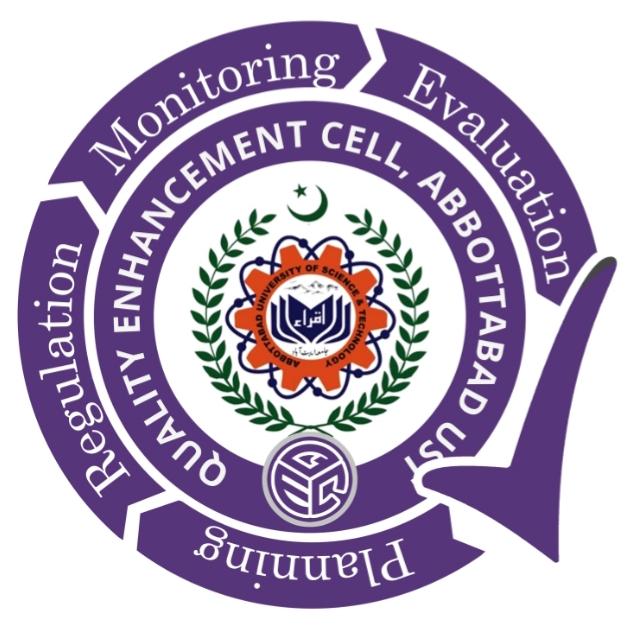
Every instrument the Directorate operates sits somewhere on this cycle. The cycle is only worth running if it closes — findings must become actions, and actions must be verified.
Define programme objectives, learning outcomes and the standards each programme will be held to.
Deliver the programme and collect evidence — results, survey responses, workload and resource data.
Assess that evidence against the criteria through self-assessment, programme review and internal audit.
Implement corrective actions, verify they worked, and carry the baseline into the next cycle.